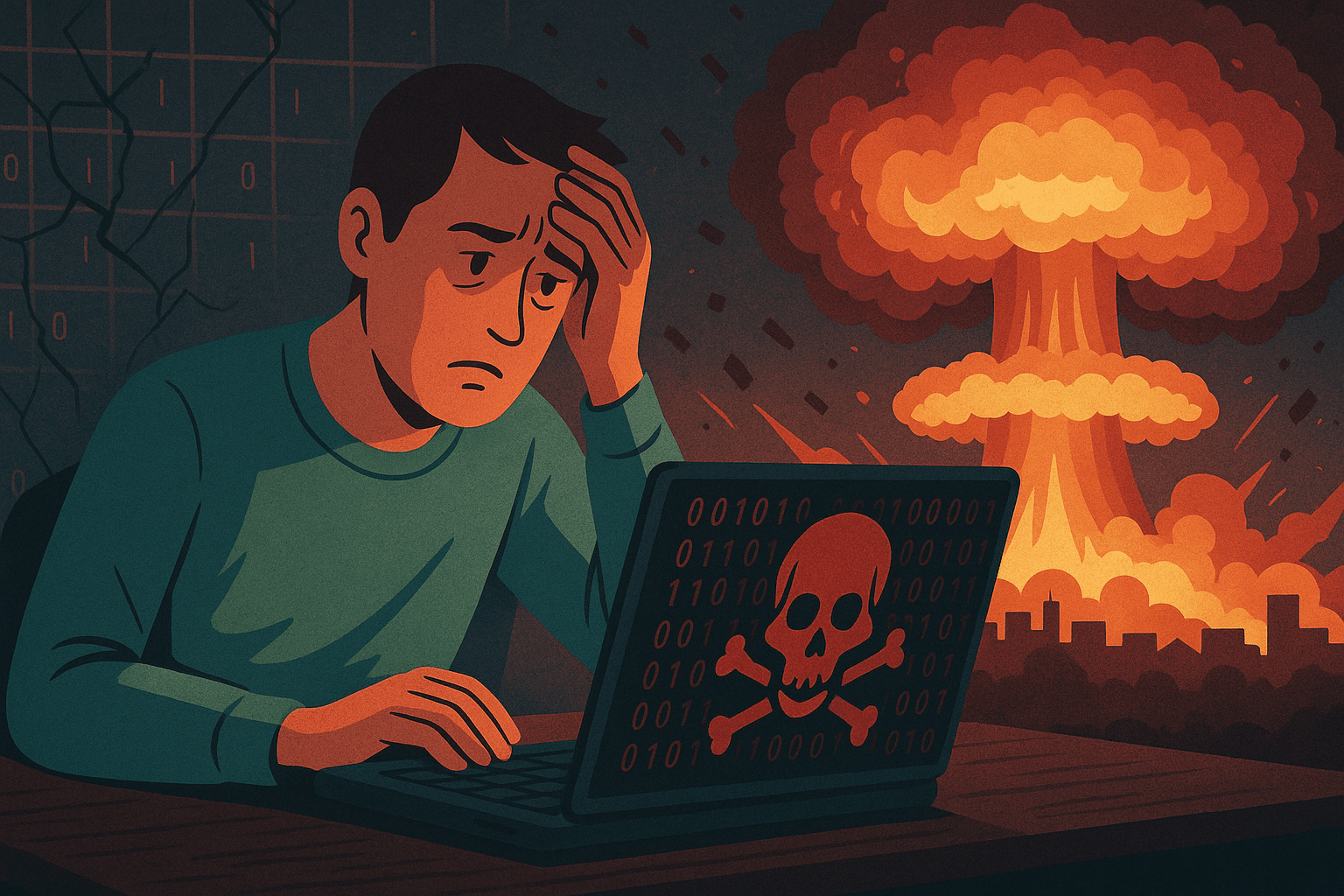
Could a Cyberattack Trigger World War 3? How to Prepare for Digital Collapse
Cyber attacks are now a top WW3 trigger. Learn about digital threats and how to prepare for potential collapse.
Introduction
Could the next world war begin not with missiles or bombs, but with code and keystrokes?
In an era where everything from electricity and water to hospitals and defense is online, cyberattacks are now considered a top trigger for World War 3 by security experts.
How real is the threat, what could digital collapse look like, and—most importantly—how can you prepare?
This in-depth guide explores the rising dangers of global cyber warfare, reviews past incidents, and offers clear, practical steps to protect yourself and your family if the internet, power grid, and digital systems suddenly fail.
Why Cyberattacks Are a Real WW3 Threat
- Critical Infrastructure Is Online: Power stations, water plants, emergency services, even nuclear defense systems depend on digital networks.
- Global Reach: Hackers and nation-states can strike across continents in seconds.
- Attribution Is Hard: Unlike traditional attacks, it’s often unclear who attacked, raising the risk of accidental escalation.
- Past Incidents:
- Stuxnet crippled Iran’s nuclear program.
- Ukraine Blackout (2015 & 2016): Suspected Russian hackers plunged millions into darkness.
- WannaCry (2017): Ransomware halted NHS hospitals and global companies.
- SolarWinds (2020): US government breached, supply chain compromised.
“The next world war will begin in cyberspace before it spills into the real world.” – NATO Cyber Defence Centre
What Would Digital Collapse Look Like?
| System Attacked | Potential Consequences |
|---|---|
| Power Grid | Blackouts, failed heating/cooling, chaos |
| Water Supply | No running water, sanitation crisis |
| Hospitals | Life-saving machines stop, chaos |
| Transportation | Grounded flights, traffic gridlock, rail failure |
| Banking/Finance | Frozen accounts, ATM failure, panic |
| Internet & Phones | No communication, confusion, fake news |
| Emergency Services | Slower response, confusion |
Reality Check: Even a short-term outage can cause cascading crises.
How Could a Cyberattack Trigger World War 3?
1. False-Flag Attacks & Escalation
A major power (US, China, Russia, EU, Iran, North Korea) is hit.
Blame is quickly (but maybe wrongly) assigned to a rival.
Rapid military responses follow, escalating to wider conflict.
2. Critical Systems Fail During Crisis
A cyberattack disables nuclear early-warning or command/control systems, increasing the risk of accidental launches or escalation due to confusion.
3. Economies & Societies Destabilize
Massive attacks on banking, healthcare, and infrastructure fuel panic, civil unrest, and political instability—creating a climate ripe for war.
Are We Really at Risk? (Expert Opinions)
- NATO and GCHQ warn cyberwar is now “inevitable” in any future conflict.
- The US, UK, and EU have all run cyberattack wargames simulating WW3 scenarios.
- Cyber arms races are escalating—more nations, more tools, more targets.
“Digital collapse is not science fiction. It’s the front line of modern warfare.” – GCHQ Security Briefing
How to Prepare for a Digital Collapse: Actionable Steps
1. Offline Survival Essentials
| Item | Why You Need It |
|---|---|
| Paper maps | GPS/online maps will be down |
| Printed contacts | Can’t rely on phone memory |
| Cash | Cards/ATMs may not work |
| Emergency kit | Light, water, food, batteries, radio |
| Backup power | Charged power bank, solar/hand crank |
2. Communication Without Internet
- Get a battery-powered or hand-crank radio for official news and alerts.
- Consider walkie-talkies or CB/ham radios for local/family comms.
- Agree on family “rendezvous points” if separated.
3. Data & Document Security
- Print out copies of:
- ID, passport, insurance, medical info, important contacts
- Bank details, emergency numbers, utility accounts
- Backup essential data on encrypted USB drives (store in safe place).
4. Power & Lighting Backup
- Stock up on torches, headlamps, and spare batteries.
- Invest in solar lanterns or crank-powered lights.
- Have spare charging cables for all devices.
5. Home Defense & Preparedness
- Keep at least 2 weeks of food and water for your household.
- Fill bathtubs and containers if water supply looks threatened.
- Plan for alternative heating/cooling if power is lost.
6. Community & Mental Resilience
- Get to know neighbors—community is key when comms go down.
- Discuss plans with family/friends in advance.
- Practice a “digital blackout day” once a year as a family drill.
What NOT to Do During a Digital Collapse
- Don’t panic buy or hoard essentials at the last minute.
- Don’t trust rumors or unverified information online.
- Don’t expect ATMs, petrol stations, or supermarkets to function normally.
- Don’t rely on smart home or “cloud” devices for safety.
Cyber Defense: What Governments Are Doing
- Major nations invest billions in cyber defense centers and “active defense.”
- New treaties and norms are under discussion—but enforcement is weak.
- Civilians are increasingly part of resilience planning (see “PREPARE” campaigns in the UK and EU).
Key Takeaways: Your Personal Cyberattack Survival Plan
| Action | Reason |
|---|---|
| Prepare offline backups | Phones/internet could be down |
| Store emergency cash | Banking systems may be frozen |
| Build a real-world network | Community matters in crisis |
| Learn radio basics | May be the only way to get news |
| Stay calm, verify info | Prevent panic and misinformation |
FAQ: Cyberattack and WW3
Could a cyberattack really start World War 3?
Yes—experts warn that a massive attack on critical systems could trigger military escalation and even nuclear conflict.
How can I prepare without tech skills?
Focus on offline essentials—food, water, backup power, communication tools, and printed documents.
Will my phone or laptop work?
Not if power grids or networks are down. Have backup methods.
Should I worry about fake news or scams?
Absolutely—cyberwar may include psychological operations. Trust only official radio or printed information during collapse.
Conclusion
Cyberwar isn’t science fiction—it’s today’s battlefield.
A single, massive cyberattack could send entire nations into chaos, sparking wider conflict or even World War 3.
But with basic preparedness, resilience, and real-world planning, you can protect yourself and those you love from the worst effects of digital collapse.
Stay alert. Stay prepared. Stay connected—even when the world goes offline.
For more survival guides, real-world prepping tips, and expert news on cyber threats, subscribe to our blog or share your own digital prepping tips below!