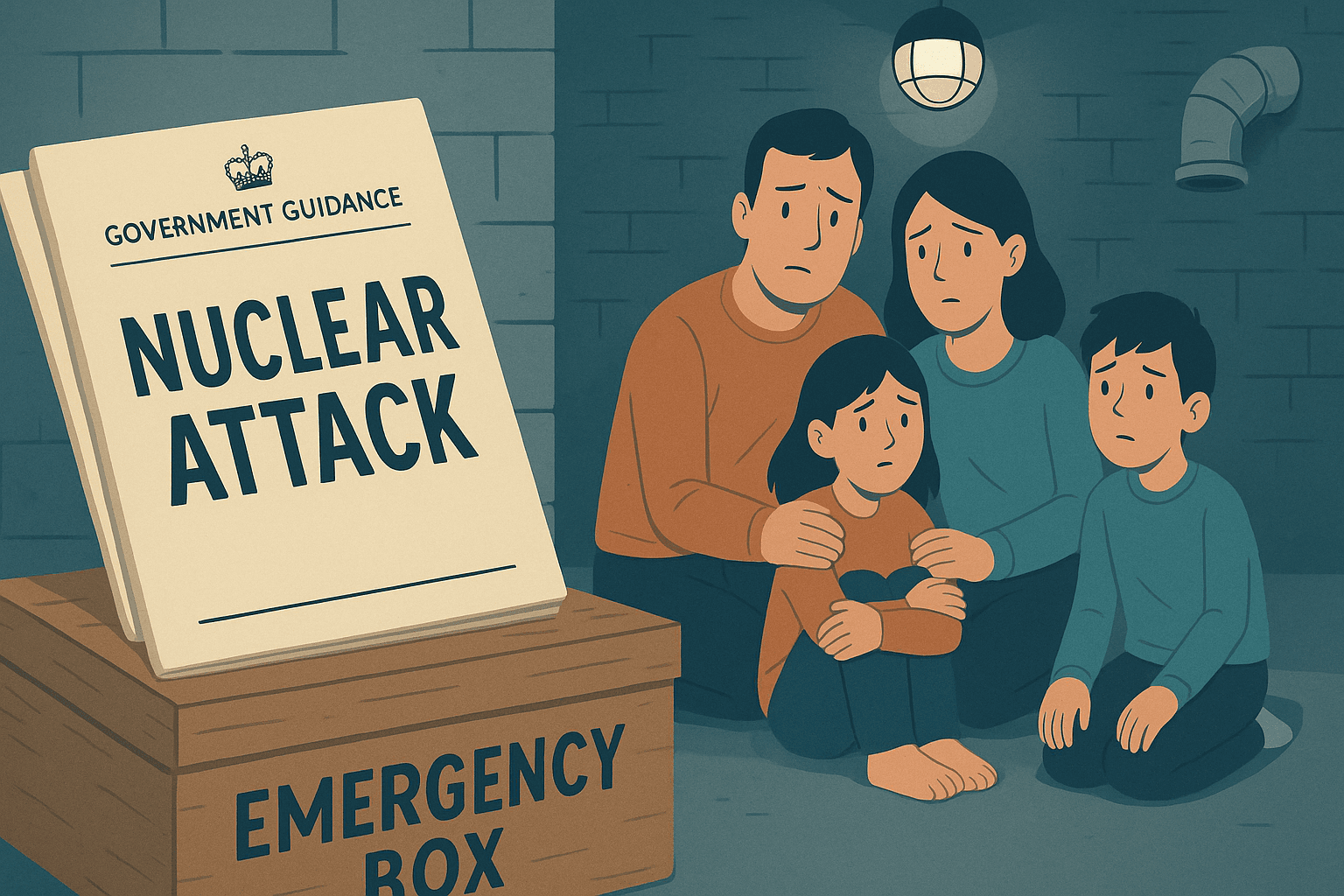
The Official UK Government Plan for a Nuclear Emergency (What They Don’t Tell You on TV)
What is the UK's official plan for nuclear emergencies? Learn the procedures that could save your life.
Introduction
If the unthinkable happens and a nuclear crisis strikes the UK, what exactly is the government’s plan to protect its people?
You won’t find all the details on the news—but every household deserves to know what really happens behind closed doors, how you’ll be warned, and what’s expected of you in the first hours and days.
This in-depth guide breaks down the UK’s official nuclear emergency procedures, civil defense secrets, and the crucial steps you can take now to boost your survival odds.
A Brief History: From “Protect and Survive” to Modern Plans
During the Cold War, every British household could get the Protect and Survive pamphlet—infamous for its practical (if sometimes terrifying) advice.
While today’s plans are less publicized, the government still maintains detailed nuclear emergency procedures under the Civil Contingencies Act and the UK Resilience Framework.
How You’ll Be Warned: Sirens, Alerts, and the UK Emergency Alert System
| Warning Method | What to Expect |
|---|---|
| Mobile Emergency Alert | Buzzing text with instructions (new system) |
| Air Raid / Nuclear Sirens | Wailing sound in cities or industrial sites |
| TV/Radio Broadcasts | Emergency message, BBC Radio/TV priority |
| Police Loudspeakers (local) | Direct voice messages in urban areas |
- The UK’s Emergency Alert System sends messages to mobile phones based on your location—no need for WiFi or 4G, as long as the phone’s on.
- Sirens remain in a few locations (notably near power plants, some ports, and Scottish submarine bases).
What the Government Will Tell You to Do
1. Shelter in Place
- Do NOT attempt to evacuate unless told by officials—roads will be blocked, and fallout risk is highest outdoors.
- Go to the nearest building, then move to an interior, windowless room or a basement if possible.
- Bring your household, pets, emergency kit, and a battery radio.
2. Seal Your Shelter
- Close all doors, windows, vents, and chimneys.
- Block gaps with duct tape, towels, bin bags, or plastic sheeting.
- Switch off fans, aircon, and ventilation.
3. Stay Tuned for Official Updates
- Listen to BBC Radio 4 (FM 92–95, LW 198) or local radio for government instructions.
- Ignore rumors and social media—only follow official channels.
4. Ration Supplies
- Use bottled or stored water.
- Avoid tap water unless told it’s safe.
- Ration food and supplies—help may not arrive for 48–72 hours.
5. Wait for the All Clear
- Remain sheltered until official all-clear is broadcast (could be 2–14 days depending on fallout).
- Only leave shelter for urgent reasons, and cover mouth/nose with a cloth when you do.
What They Don’t Tell You on TV
1. Medical Help Will Be Extremely Limited
- The NHS will prioritize survivors with the highest chance of recovery.
- You may be on your own for days; basic first aid knowledge and supplies are crucial.
2. Evacuation Plans Are for Key Sites, Not Most Citizens
- UK cities have NO mass evacuation plan for nuclear events; priority is shelter-in-place.
- Only areas near military or critical sites may be moved.
3. Government Supplies Will Be Delayed
- The UK has limited reserves of food, water, and medicines; expect to rely on your own stocks for several days.
- “Resilience Hubs” may be set up later, but don’t count on instant aid.
4. Long-Term Fallout Is Possible
- Certain areas may remain hazardous for weeks or even months.
- The government will monitor radiation and set up exclusion zones—do not return to evacuated areas until told it’s safe.
The “Secret” Civil Defense Plans
The UK maintains a network of regional control centres (often underground) where government and military officials coordinate the response, communicate with local authorities, and direct resources.
Some Cold War bunkers remain on standby as backup government seats.
Fun Fact: The “four-minute warning” (the time from missile detection to impact) was real—and still shapes UK planning today.
What Should YOU Do Now? (Personal Preparedness)
| Step | Why It Matters |
|---|---|
| Identify your safest room | Saves time in a real alert |
| Build an emergency kit | Water, food, radio, torch, first aid |
| Keep a battery/hand radio | Phones/net may fail |
| Know your neighbors | Support is vital if cut off from services |
| Print out key info | Contact numbers, NHS details, plans |
| Run a family drill | Make response automatic, not a decision |
Remember: In a crisis, preparedness beats panic every time.
FAQs: UK Nuclear Emergency Planning
Will the government evacuate whole cities?
No. UK policy is to shelter in place. Only specific risk zones (near military, nuclear sites) may be evacuated in advance.
Is there still a “four-minute warning”?
While public warnings may come by phone or radio, early warning systems still exist, but actual warning time could be less than 10 minutes.
What about pets?
Official advice is to shelter with your pets. Prepare food, water, and comfort items for them too.
Can I rely on supermarkets and cashpoints?
No. Supplies will run out fast, and digital payments may fail.
Conclusion
The UK government has a plan—but the more you do NOW, the safer you’ll be.
Understand official advice, practice your household response, and quietly build your own resilience.
In the end, your knowledge and actions could make all the difference when the sirens sound.
For more practical nuclear preparedness guides, supply checklists, and official resources, explore the rest of our site or download our printable UK Nuclear Emergency PDF!