UK–France to Coordinate Nuclear Strikes: What the Landmark WW3 Agreement Means for Global Security
UK and France agree to coordinate nuclear strikes. What this historic agreement means for global security.
Introduction
In an unprecedented move, the United Kingdom and France have signed a landmark agreement to coordinate their nuclear strike strategies in the event of World War III.
This new defense partnership marks the closest nuclear cooperation between the two nations since the dawn of the atomic age and is seen by experts as a direct response to escalating Russian aggression and global instability.
But what does this nuclear deal really mean for ordinary people, NATO, and the future of deterrence in Europe?
Read on for a deep-dive into the UK–France nuclear alliance, its impact on WW3 preparedness, and why it matters right now.
What Is the UK–France Nuclear Coordination Agreement?
The new pact, revealed in July 2025, cements a plan for the UK and France to:
- Closely coordinate nuclear strike responses in the event of an existential threat or global war
- Share intelligence, targeting data, and readiness plans in real time
- Jointly invest in new missile and deterrence technologies (notably the Storm Shadow cruise missile)
- Reinforce conventional military ties alongside the nuclear partnership
Why Now?
- Rising Russian threats: As tensions spike in Eastern Europe, both London and Paris see the need for a united nuclear front.
- US uncertainty: With the US shifting focus to the Pacific, European nuclear powers are stepping up their own coordination.
- NATO solidarity: The move aims to reassure allies in Europe that nuclear deterrence remains credible and united.
How Does UK–France Nuclear Coordination Work?
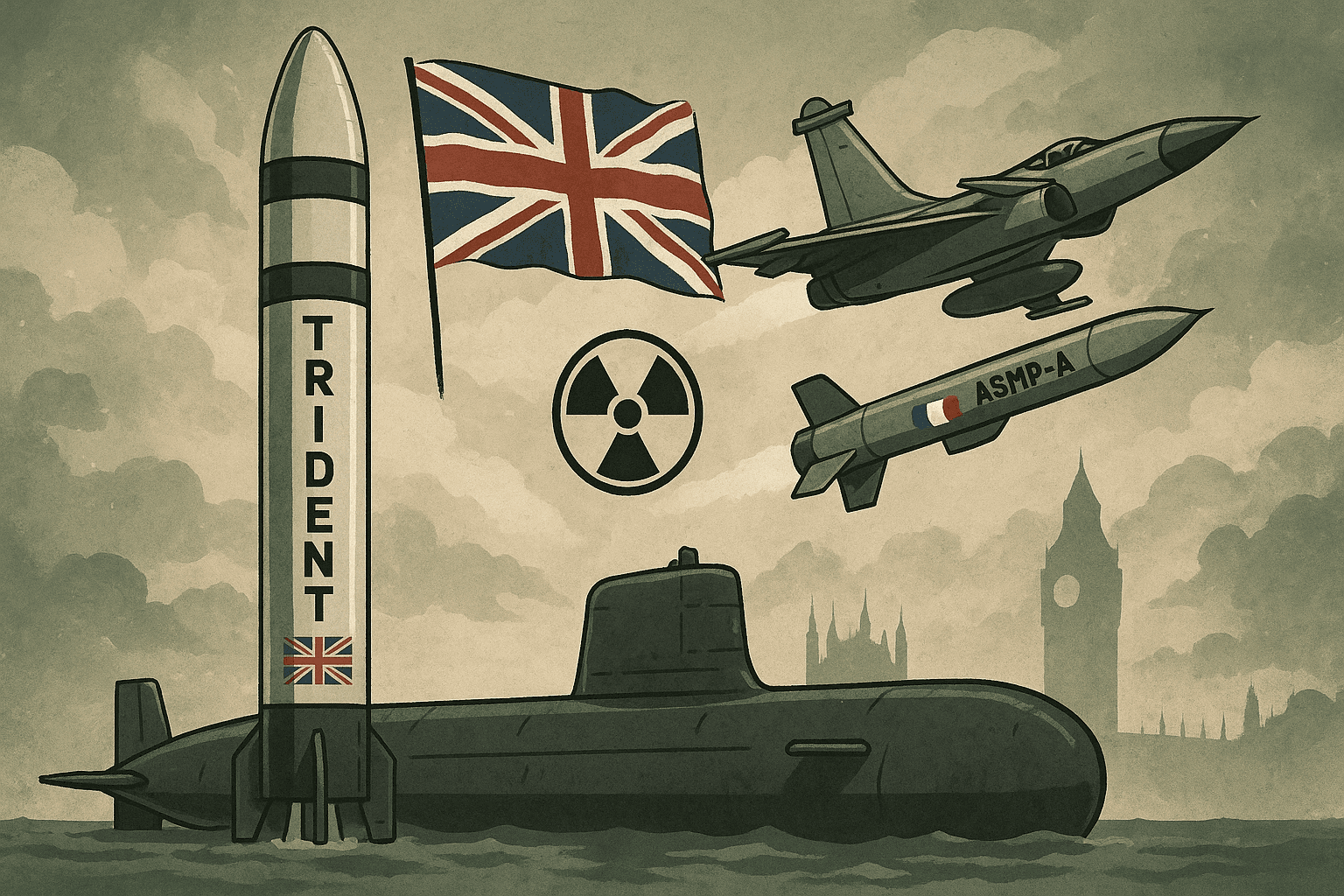
While both nations maintain independent nuclear arsenals (UK: Trident submarines; France: air-launched and submarine missiles), the agreement means:
- Shared targeting doctrine: In a crisis, British and French nuclear forces would avoid overlap, maximize coverage, and coordinate responses for maximum deterrent effect.
- Real-time communication: Secure lines for instant updates, alerting, and even mutual consultation in a rapidly evolving conflict.
- Joint exercises: Regular nuclear drills simulating coordinated response to a Russian or “rogue state” strike.
Note: Both countries remain fully sovereign—neither can command the other's arsenal, but cooperation is deeper than ever before.
Why Is This a Game-Changer for World War 3 Deterrence?
1. Doubles the Complexity for Potential Adversaries
An aggressor now faces not one, but two fully independent, but coordinated, nuclear powers on European soil—complicating any calculations about a “decapitation strike” or quick victory.
2. Boosts NATO’s Nuclear Posture
The UK and France are the only two European NATO members with their own nuclear weapons. By aligning their strategies, they strengthen the alliance’s overall deterrence—sending a message of unity to both Russia and any other state considering nuclear escalation.
3. Technological Modernization
Both nations are investing billions in upgrading their nuclear and conventional arsenals:
- Storm Shadow missiles: Advanced, long-range, precision-guided cruise missiles that can strike high-value targets even in defended airspace.
- Modernized submarines and warheads: Ensuring credibility and survivability of their deterrents.
Implications for Russia and Global Security
| Stakeholder | Effect |
|---|---|
| Russia | Increases strategic uncertainty; complicates planning for any attack on Europe |
| NATO allies | More credible, resilient nuclear umbrella in Europe |
| US (America) | Reduces sole burden of extended deterrence |
| General public | Reassurance—but also a stark reminder of nuclear risks |
Expert Quote:
"By coordinating their nuclear arsenals, Britain and France are sending an unmistakable signal: Any attack on Europe will meet an overwhelming, united response."
— Dr. Peter West, European Security Institute
Public and Political Reactions
- UK Parliament: Broad cross-party support, seen as vital for national security
- French Assembly: Some debate about sovereignty, but majority approval
- NATO Headquarters: Quiet celebration—eases worries about European defense gaps
- Public: Mix of relief (stronger deterrence) and concern about becoming a primary nuclear target
What Does This Mean for WW3 Preparedness?
For Governments
- Improved readiness: Faster response times, clearer chains of command in crisis
- Enhanced intelligence sharing: Greater situational awareness across Western Europe
For Ordinary Citizens
- Reassurance: More robust defense reduces likelihood of actual nuclear war
- Preparedness advice remains unchanged: Governments urge people to stay informed, know local shelter locations, and keep emergency kits ready in the (very unlikely) event of escalation.
FAQs: UK–France Nuclear Cooperation
Does this mean the UK and France can launch each other’s missiles?
No—each retains full national control, but will consult and coordinate responses.
Is the Storm Shadow missile nuclear?
No, the Storm Shadow is a conventional (non-nuclear) cruise missile, but its integration into joint defense planning is significant.
Could this provoke Russia?
Analysts believe the agreement is a defensive move, aiming to strengthen deterrence rather than escalate tensions.
Will other NATO countries join?
Not directly—Germany, Italy, and others rely on NATO’s US-led nuclear umbrella, but this could inspire more European defense collaboration.
Conclusion
The UK–France nuclear coordination agreement is one of the most significant developments in European defense since the Cold War.
For ordinary citizens, it means greater security—and, perhaps, a little more peace of mind in an uncertain world.
But it’s also a stark reminder that the risk of global conflict remains real, and preparedness—at every level—still matters.
For more on nuclear preparedness, fallout shelters, and WW3 news, browse our full survival guide library or sign up for alerts.