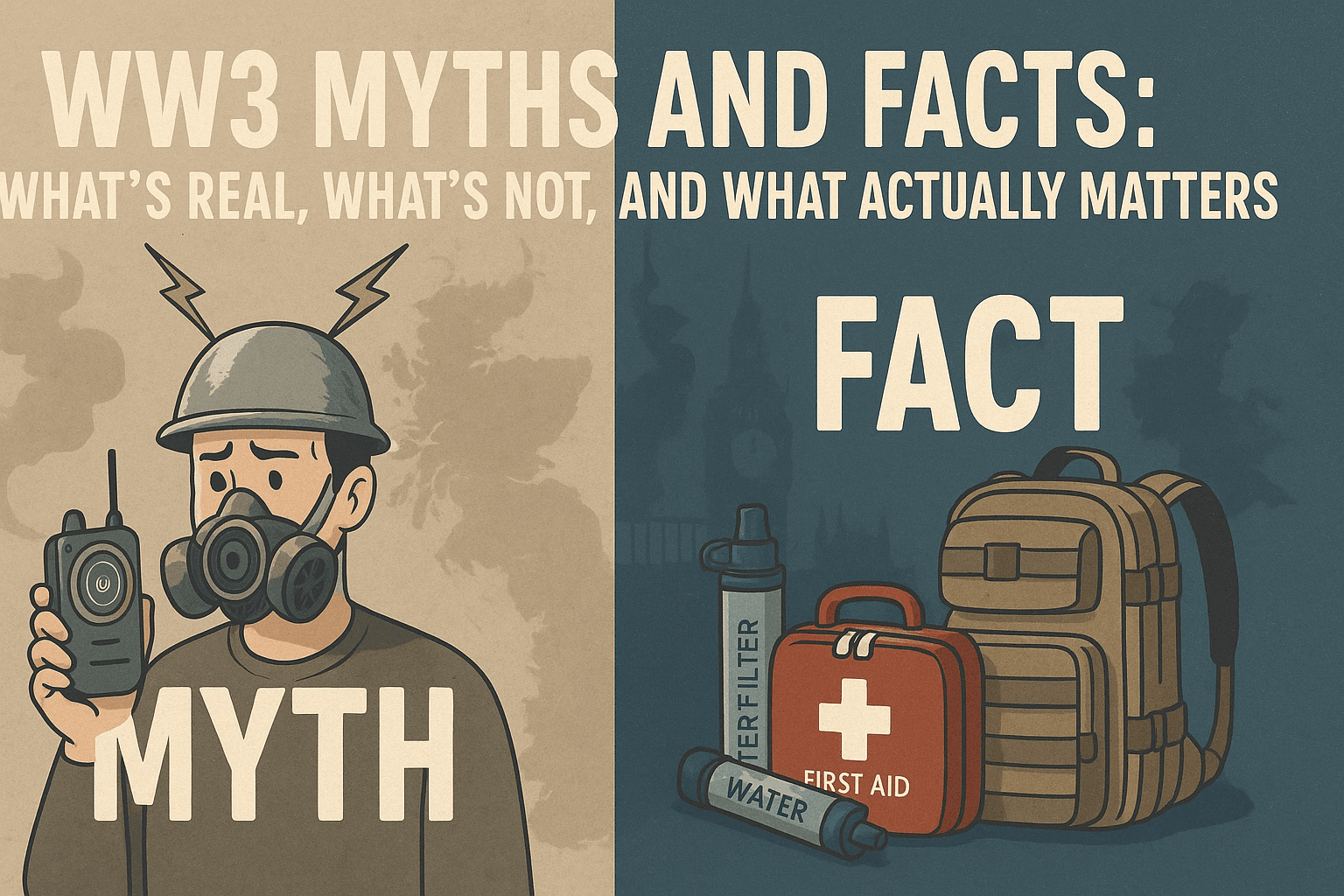
WW3 Myths and Facts: What’s Real, What’s Not, and What Actually Matters
WW3 myths are everywhere. Get the facts about nuclear war survival and what you actually need to prepare.
Introduction
WW3—World War 3—sparks both fear and fascination, especially in times of global tension.
But how much of what you’ve heard is true?
From Hollywood movies to survival forums and viral social media, myths about World War 3 are everywhere—while the real risks and practical facts are often lost in the noise.
This in-depth guide will bust the most common WW3 myths, highlight the facts that matter, and offer expert-backed advice on what you should actually do to prepare for a major conflict or nuclear event.
Top 10 Most Common WW3 Myths (And the Real Facts)
| Myth | The Truth (Fact) |
|---|---|
| 1. “Everyone will die in a nuclear war.” | Most people outside blast zones will survive the initial attack. The greatest risks come from fallout and the breakdown of infrastructure. |
| 2. “There will be no warning before WW3.” | Warning signs—military alerts, civil defense messages, news leaks—usually appear before large-scale conflict. |
| 3. “Bunkers are only for the rich.” | DIY or improvised fallout shelters can save lives. Concrete basements, underground car parks, and windowless interior rooms offer real protection. |
| 4. “Only military targets matter.” | Major cities, communication hubs, and critical infrastructure are also at risk. Civilian areas are rarely immune. |
| 5. “Food and water will instantly disappear.” | Panic buying causes shortages, not instant disaster. Smart prepping can buffer supply issues. |
| 6. “Radiation means instant death.” | Most fallout-related deaths are preventable. Shelter, timing, and hygiene greatly reduce risks. |
| 7. “Nuclear weapons mean the world ends.” | Nuclear war would be catastrophic, but not “the end of the world.” Most experts expect survivors and even recovery over time. |
| 8. “Internet and phones will always work.” | EMPs, cyber attacks, and grid failures can take down digital comms. Radios and offline maps are essential. |
| 9. “Survival is all about weapons.” | Shelter, water, food, warmth, and first aid are far more important than self-defense gear. Community also matters. |
| 10. “Governments will abandon you.” | Most modern nations have robust civil defense and disaster plans. Knowing official procedures and locations improves survival chances. |
Myth-by-Myth Breakdown
1. "Everyone Will Die in a Nuclear War"
Fact:
Even in a worst-case scenario, over 80% of the population is likely to survive the initial blasts.
The real challenge is surviving fallout, maintaining supplies, and avoiding disease or injury in the aftermath.
2. "There Will Be No Warning"
Fact:
Modern intelligence, early warning systems, and global media mean there are usually clear signs (military movements, news alerts, government advisories) before all-out war.
3. "Bunkers Are Only for the Rich"
Fact:
You can improvise shelters using your home’s basement, inner hallways, or even by piling earth, books, or water containers against doors and walls.
Community and public shelters exist in some regions.
4. "Only Military Targets Are At Risk"
Fact:
Critical infrastructure (power stations, transport hubs, telecoms) and urban centers are potential targets. Proximity to these increases risk, but fallout can travel far.
5. "Food and Water Will Disappear Instantly"
Fact:
Shortages occur due to panic buying and disrupted supply chains.
Tip: Prepping gradually, before any crisis, is the smartest approach.
6. "Radiation = Instant Death"
Fact:
Lethal radiation is highest in the first 24–48 hours and drops rapidly. Most people can survive if they shelter and avoid contaminated food/water.
7. "Nuclear War = The End of the World"
Fact:
Survivors are likely. The environment will suffer, but recovery is possible over years or decades, as seen after Hiroshima/Nagasaki.
8. "Internet and Phones Always Work"
Fact:
EMPs (electromagnetic pulses), cyber attacks, and grid failures can disrupt or destroy digital comms.
Tip: Have a battery-powered radio and offline map backup.
9. "Survival = Weapons and Self-Defense"
Fact:
Most survival needs are about water, shelter, food, medical care, and heat—not weapons. Skills, community, and mindset matter most.
10. "Governments Will Abandon You"
Fact:
Civil defense instructions, shelters, food rationing, and emergency broadcasts are usually implemented quickly.
Knowing the official advice saves lives.
What Actually Matters: Practical WW3 Survival Facts
| Priority | What to Do | Why It Matters |
|---|---|---|
| Shelter | Identify windowless rooms, basements, or nearby public shelters | Blocks fallout, saves lives |
| Water | Store at least 2L per person per day (2+ weeks) | Water supply may be contaminated |
| Food | Stock 2–3 weeks of non-perishable, high-calorie food | Supply chains may fail |
| Communication | Get a battery/hand-crank radio, print key info | Phones/networks may go down |
| Health & Hygiene | First aid kit, soap, wipes, masks | Prevents disease, infection |
| Mental Resilience | Routine, family support, information filtering | Panic kills; calm saves |
Real WW3 Risks (And How to Prepare)
-
Radiation and Fallout
- Know the basics of sheltering in place for 48–72 hours
- Have plastic & duct tape to seal windows, doors, and vents
-
Supply Shortages
- Gradually build food and water stockpiles
- Store medicines and critical supplies
-
Communication Failure
- Learn local radio frequencies
- Write down contacts and key addresses
-
Health Emergencies
- Learn basic first aid
- Have necessary medications, PPE, and hygiene gear
-
Mental Health and Community
- Prepare a plan with family, friends, or neighbors
- Practice “information hygiene” (verify news, avoid rumors)
Quick WW3 Survival Kit Checklist
| Item | Packed? |
|---|---|
| Water (14+ liters) | |
| Non-perishable food | |
| First aid kit & meds | |
| Radio (battery/hand) | |
| Flashlight & batteries | |
| Masks, wipes, soap | |
| Emergency contacts | |
| Copies of documents | |
| Shelter materials | |
| Offline maps |
Frequently Asked Questions
Is World War 3 likely in our lifetime?
Experts agree it’s possible, but not inevitable. The risk rises and falls with geopolitics, but awareness and basic preparation are always smart.
Can you really survive a nuclear war?
Yes—if you’re not in the immediate blast zone and you act quickly to shelter from fallout and maintain basic needs.
What is the biggest prepping myth for WW3?
That “doomsday preppers” are all paranoid—when in reality, basic preparedness is recommended by every government and saves lives in all kinds of disasters.
Should I build an underground bunker?
For most people, improving existing rooms (basement, bathroom) is more realistic than building a dedicated bunker.
Conclusion
Don’t let WW3 myths cloud your judgment.
Focus on practical, fact-based preparedness:
Shelter, water, food, communication, and mental resilience are your best allies.
Stay informed, stay calm, and remember—preparedness is about peace of mind, not paranoia.
For more survival facts, prepping guides, and debunked myths, explore the rest of our blog or subscribe for updates!